20f - A large Cryptosporidium parvum outbreak associated with a lamb-feeding event at a working farm in South Wales, March-April 2024: a retrospective cohort study
Poster tour posters
Information
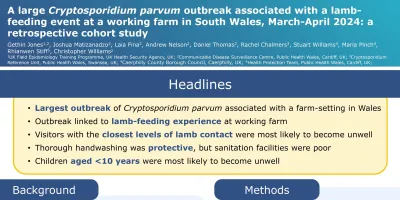
Background : During March and April 2024, 59 laboratory-confirmed Cryptosporidium cases linked to a working farm offering a lamb-feeding experience were notified to Public Health Wales. Environmental investigations highlighted multiple risk factors and microbiological investigations genetically linked lambs to outbreak cases. A retrospective cohort study was conducted to identify high-risk activities at the farm to tailor interventions.
Methods : Exposure information including participation in various farm activities was collected via an online survey distributed to those booking the lamb-feeding experience. Cases were defined as any individual reporting gastrointestinal symptoms within 3-14 days of attendance. A multivariable logistic regression model was determined by forward stepwise inclusion of variables (p-value<0.2) considering goodness-of-fit (Akaike information criterion) to give adjusted odds ratios (aOR) and 95% confidence intervals (95%CI).
Results : Of the 540 eligible responses, we identified 168 cases. Cases were mostly female (79%), with a median age of 31 years (range 1-80 years). Cases were less likely to have thoroughly washed their hands (aOR 0.5, 95%CI: 0.2-1.0), and more likely to have had visible faeces on their person (aOR 3.6, 95%CI: 2.1-6.2), or kissed/had face-contact with lambs (aOR 2.4, 95%CI: 1.2-4.8). The highest odds were among children aged <9 years (aOR 4.5, 95%CI: 2.0-10.0).
Conclusions This Cryptosporidium outbreak represents the largest associated with a farm-setting in Wales. This study supports environmental and microbiological investigations that lambs were the source of the outbreak. We provide evidence that close-contact at lamb-feeding events presents an increased likelihood of illness, suggesting farms should limit animal contact at these events and revisions to established codes of practice may be necessary. Enhancing risk awareness among farmers/visitors is needed, particularly regarding children, alongside ensuring availability of adequate sanitisation facilities.