7a - Evaluation of the European severe acute respiratory infection surveillance, October 2023: useful, acceptable, and meets its main objective
Poster tour posters
Information
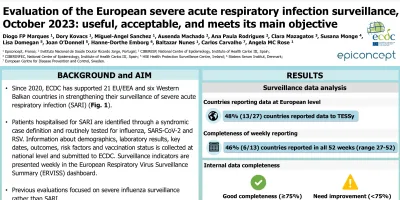
Background : Since 2020, ECDC has supported 27 EU/EEA and Western Balkans countries enhancing their severe acute respiratory infection (SARI) surveillance to monitor SARI trends, detect unexpected events, evaluate public health interventions, identify severe disease risk factors, and support vaccine effectiveness studies. Using diverse strategies, countries have implemented SARI surveillance and report data at national/European levels. In 2023, we evaluated this surveillance to provide recommendations for further enhancement.
Methods : From July to October 2023, we administered an online questionnaire targeting representatives of SARI surveillance systems from 27 countries and ECDC/WHO staff to evaluate key surveillance attributes (meeting objectives, usefulness, acceptability, timeliness, representativeness) and to identify the main strengths, weaknesses, opportunities and threats.
Results : The questionnaire response rate was 27% (54/198). Most respondents (76%; 41/54) reported that the system met its main objective of trend monitoring and considered it useful (89%; 48/54), acceptable (83%; 45/54), timely (56%; 30/54) and representative (46%; 25/54). Insufficient data completeness and data linkage were identified as reasons for not meeting the remaining surveillance objectives. High workload jeopardised timeliness, while inadequate geographical coverage limited representativeness. Multi-pathogen surveillance was identified as the main strength, heterogeneity of national SARI surveillance systems the main weakness, improvements of hospital information systems to allow data linkage/sharing the main opportunity, and lack of sustainable funding the main threat.
Conclusions SARI surveillance was perceived as meeting its main objective and being useful and acceptable. To achieve additional objectives and enhance timeliness and representativeness, we recommend countries to improve data completeness, reduce workload, and expand geographical coverage. Such improvements would allow SARI surveillance to identify risk factors for severe outcomes, monitor the impact/effectiveness of public health interventions, and further contribute to pandemic preparedness and response.