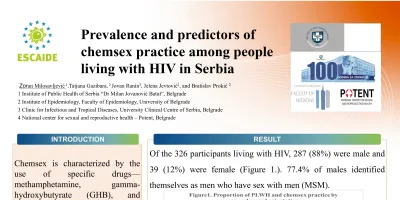
Background : Chemsex is characterized by the use of specific drugs—methamphetamine, gamma-hydroxybutyrate (GHB), and mephedrone—in sexualized settings. This behavior has been on the rise the past few years. The risk of contracting sexually transmitted infections and HIV, as well as drug-drug interactions, increases in chemsex parties with multiple sexual partners and, therefore, represents a serious emerging public health problem. The purpose of this study was to estimate the prevalence and factors associated with chemsex practice in people living with HIV (PLWH).
Methods : We conducted a cross-sectional study with 326 PLWH living throughout Serbia. Participants responded to a questionnaire covering their demographic data, health behaviors, duration of having HIV, their viral load, and substance use with a focus on chemsex drugs. We used an adjusted logistic regression model to identify predictors for chemsex practice among PLWH.
Results : Of the 326 participants living with HIV, 287 (88%) were male and 39 (12%) were female. 77.4% of males identified themselves as men who have sex with men (MSM). A total of 20.6% of men (59/287) and 5.1% of women (2/39) confirmed current chemsex practice. Among people who practiced chemsex, 88.5% were from the MSM population. Being younger (odds ratio [OR]=0.94; 95% confidence interval [CI] 0.84-0.99), knowing their current PCR result/viral load (OR=7.57; 95%CI 1.19-48.08), alcohol intake (OR=3.47; 95%CI 1.60-7.53), cocaine use (OR=6.56; 95%CI 2.15-20.00), and poppers use (OR=9.29; 95%CI 4.21-20.47) were associated with practicing chemsex among PLWH.
Conclusions One in five PLWH in Serbia practices chemsex. Younger PLWH, as well as those who use other psychoactive substances, are more likely to engage in chemsex. Supporting PLWH to reduce psychoactive substance use is necessary to improve their well-being and prevent HIV transmission.